



Cultural Sustainability, Cultural Competency, and Sustainable Development:
Sustainable development is where the relationship between humans and nature needs to be understood and preserved. Sustainable development goals aim to involve local actors to plan, implement, and act on their own needs while understanding their contextual realities (Santha,2019). Cultural sustainability is an important pillar of sustainable development as it values and respects the right to own language, culture, environment, traditions, and cultural memory. This dimension of sustainable development focuses on cultural context and people-centered development (World Commission on Culture and Development, 1995). Social work as a profession has consistently highlighted the importance of culture and cultural competency in its interventions. Cultural sensitivity and being conscious of cultural diversity are important to ensure cultural competency in any intervention.
Sustainable development and culture are concepts that are complex and fluid; integration of these in practice requires the skills of cultural competency. Cultural competency is the process by which social workers transform knowledge and conduct professional work that embraces the culture of the community, understands, and respects the differences, and ensures the provision of services in alignment with the distinctive culture (Este,2007). A social worker is sensitive to the cultural dynamics and works towards meeting the culturally unique needs of the population. Working with cultural competency requires the knowledge of the community's worldview to ensure acceptable and people-centered interventions; it requires the skills to communicate and form meaningful trusting relationships with the community. It requires the skill of critical analysis and planning to ensure context-specific interventions (NASW,2001).
This paper discusses the livelihood interventions of the Pragati-Integrated Rural Health and Development Project (IRHDP) that highlight the relevance of community-based practice and focusses on cultural competency as small steps towards achieving the sustainable development goals.
Pragati-IRHDP
Pragati- IRHDP is a field action project of the Tata Institute of Social Sciences, Mumbai. The project was initiated in 1986 by Professor Vimla Nadkarni to work on the underlying linkages between health and development. Aghai is a gram panchayat (it has a village self-governance body) located 100 km from Mumbai, in Thane district, Maharashtra. The location of the project is under the Tansa Wildlife Sanctuary. In 1970, the large forest areas surrounding the Tansa Dam were proclaimed as protected wildlife sanctuary under the Wildlife Preservation Act. This means that only tribal residents are allowed full access, and no commercial farming was/is allowed. It is predominantly a tribal area, and the major tribal groups are Katkari, Warli, Malhar Koli, and Kokna. The social exclusion faced by the tribal groups in the area has been well documented. This area historically has some of the poorest development indicators. (Mutatkar, 2017; Waghmore & Jojo, 2014).
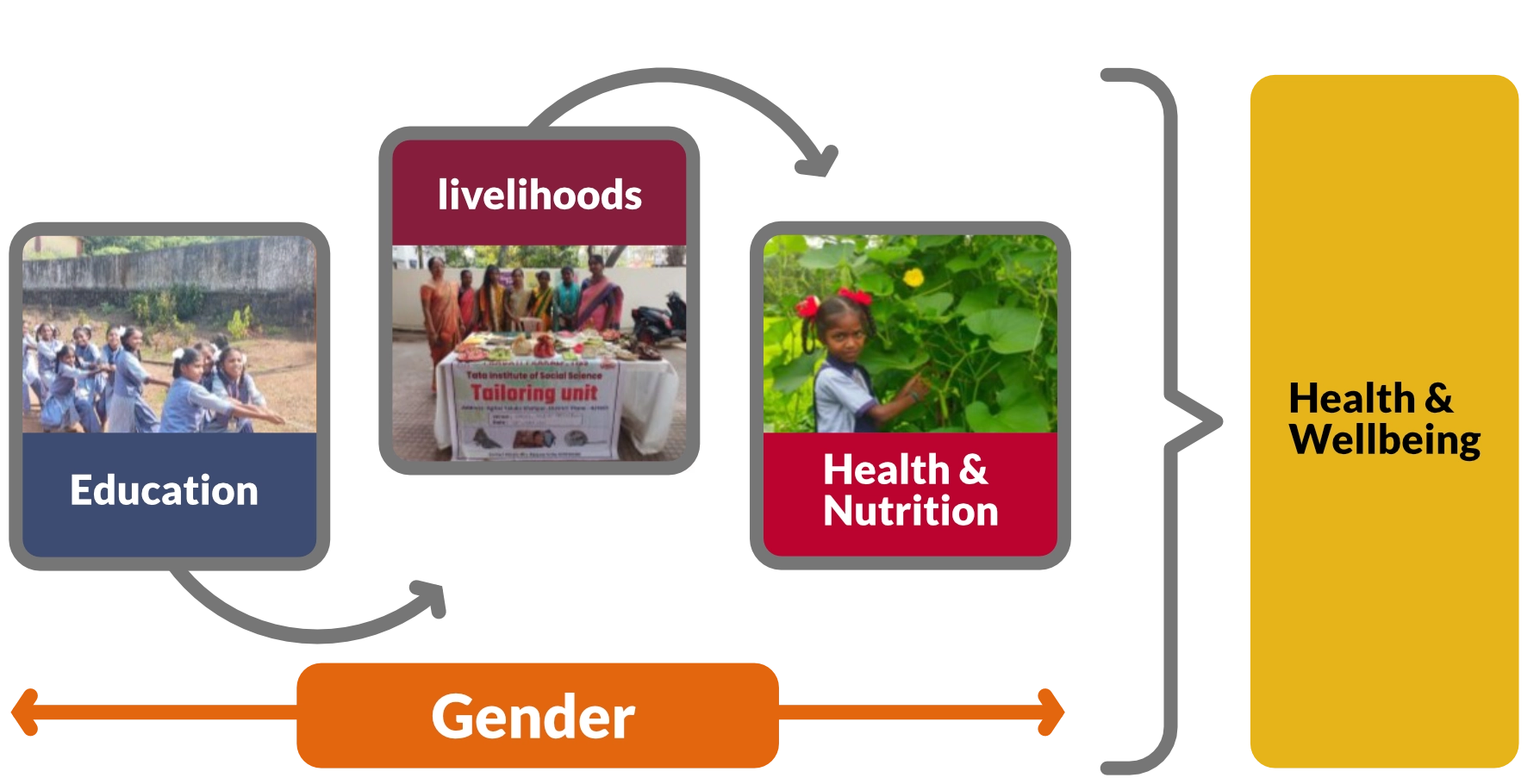
The work of Pragati project has historically focussed on people-centered development. Elsewhere, we have documented the work done over the last four decades and the challenges Pragati faces (Soletti and Nadkarni, 2017; Nair, Soletti & Yadav, 2023). Social determinants of health and multi-dimensional poverty have been the theoretical focus of the project's interventions. The socio-ecological perspective is used to plan interventions focusing on individuals, schools, communities, and government institutions. The three main pillars of health and nutrition, education, and livelihoods and the intersectoral linkages between them are the main areas of work of the project (Figure 1). These three pillars are pathways to achieving sustainable development goals through community-based interventions. The project is currently working in 22 padas (hamlet). Cultural sustainability is considered an enabler for sustainable development in these community-based interventions. We highlight the livelihood interventions of the project to highlight the relevance of cultural sustainability.
Livelihoods and Cultural Sustainability:
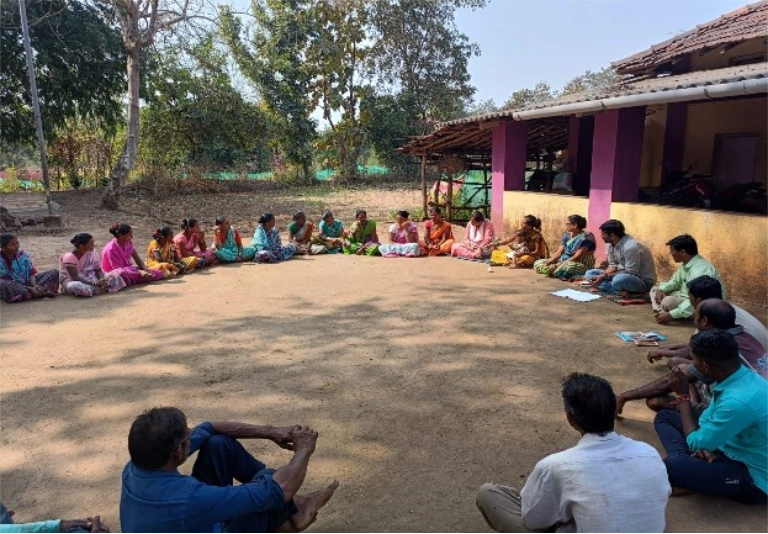
Pragati's work has focussed on community participation and cultural integration. The livelihood intervention (Figure 2) of the project emphasized building on the community's strengths, and local knowledge systems are given priority. Land and access to land and forests are crucial to the tribal communities, and there is a synergistic relationship that the tribal communities share with jal, jungle, aur jameen. Sustaining this synergy is essential, therefore, the project works on land, water, and farming. The approach was to plan interventions that are meaningful to the daily lives and needs of the tribal population, keeping the tangible and intangible assets at the center of the intervention (Daskon and Binns,2010). Over the years, increasing droughts and dwindling support mechanisms resulted in depleting opportunities for agriculture. This acted as a push factor for many farmers and youth to migrate to peri-urban areas in search of jobs. Being unskilled made them accept poorly paid informal sector jobs. Farmers and youth left their families and older adults behind in the padas. It created a vicious cycle of poverty. To break the vicious cycle, we worked towards supporting the tribal communities to reclaim their space.
Connecting/ Reconnecting to land:
Tribal communities innately connect to the natural resources. Farming is an important skill and is an inherent skill of the local communities the project works with. The project aimed to reconnect the farmers to their land, building on their strengths and working on the assets they had, a System of Rice Intensification (SRI) and organic farming were initiated in the hamlets.
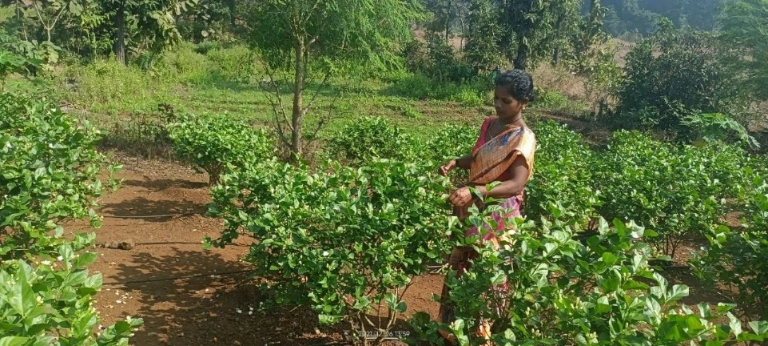
Along with this, an effort was made to introduce the concept of nutri-gardens, where the local vegetables are grown for consumption and surplus is sold in the market. The project has initiated jasmine farming as a commercial crop that fetched farmers' income. Jasmine is a low-maintenance, high-yield, resilient crop, thus ensuring a stable income for years. Training in farming-related activities was accompanied by the provision of kits and saplings.
The project co-created diversified livelihood avenues through land-based interventions with the local communities and other stakeholders. Key interventions that reconnected the tribal communities to land and natural resources:
- Farm-based interventions: A wide range of crops to like rice, pulses, and jasmine flowers increase productivity and fetch income. Kitchen gardens and vegetable cultivation have been introduced recently to influence local consumption of nutritious food.
- Water is a critical resource and substantial attention is given to effective water conservation mechanisms. The project initiated low-cost and efficient irrigation mechanisms like drip irrigation and setting up for flood irrigation in one pada that require minimal resources. Also worked on local systems of water conservation mechanisms like Goni Bhandara.
- Attempts are made to promote conservation agriculture, preparation and use of organic manures, and introduction of intercropping mechanisms.
- Shifting the livelihood initiatives beyond basic subsistence to add basic assets and enhance the living standards of households in the padas.
Enhancing Access to Water and Livelihood Options:
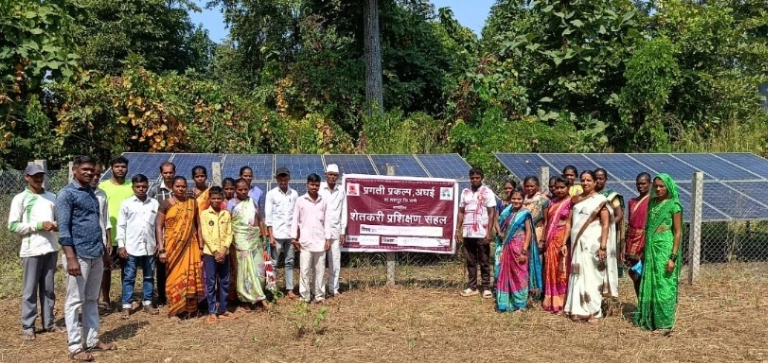
Another vital step toward sustainability was laying down waterpipes in two of the hamlets where there was water scarcity. The entire process of laying down the pipeline was community-led, with Pragati playing a facilitator's role. A water committee was formed in the community to ensure that the pipeline is maintained. Laying a pipeline has reversed migration in two hamlets. Farmers are engaged in sustainable agriculture in these padas, and the outcome has been fruitful.
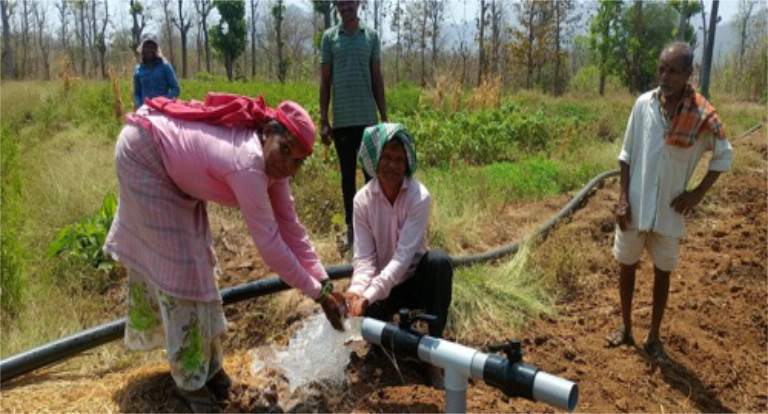
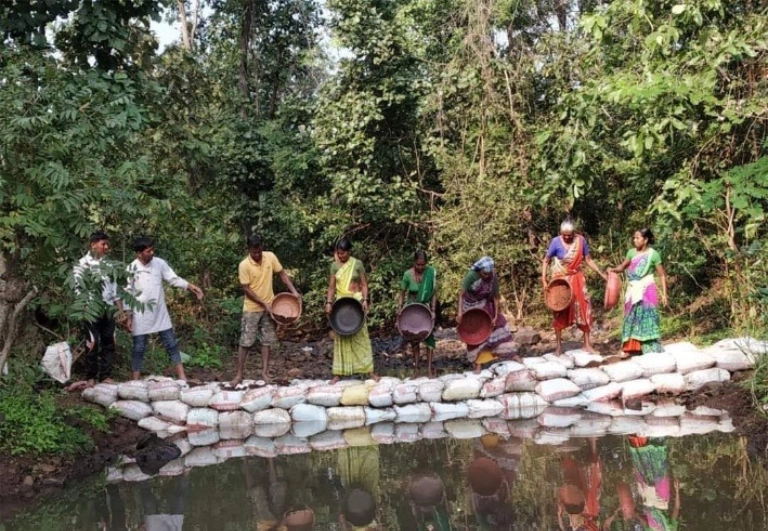
"Water pipeline has transformed our lives. We do not need to migrate for seasonal and petty jobs in places that are unfamiliar to us. We have left our families alone for months to earn a meagre income. That meagre income was insufficient even for survival. We had to stay on roads and shanties to save money. Now, with the impetus you have given us through this water pipeline and the seeds to kickstart our work, we are confident that we will lead a life with dignity in the coming years, also experiencing the comfort of staying together as a family and working together in the farm as a family."- Farmer from Malepada
Alongside water and land, the project facilitated livestock and apiculture, which aids the farming practices and supports landless families. Working with key stakeholders:
The forest department is an integral part of the work with the community; an example is that Pragati has built a storage facility where the farmers can store vegetables and other crops. Along with this, the plan is to start seed banking, so the local food knowledge of the community is sustained. The cultural knowledge of the community is the starting point for livelihood intervention and an important resource throughout the process of ensuring a generational transfer of knowledge. Building local leadership ensures community sustainability and the transfer of the cultural knowledge of the community.
A field action project of the institute is also a space for the social work students to do fieldwork and learn from the community. Pragati- IRHDP provides a space for students to engage and understand the local context, rural realities, and the importance of a people-centered approach, which is an important way forward to ensure sustainable community development. The relevance of cultural sustainability and cultural competency skills are learned through the hands-on training.
Cultural sustainability and Livelihood intervention: Achieving SDG's now and in the future.
The work of Pragati project has highlighted some important lessons for achieving SDGs and ensuring that the interventions continue to have an impact in the future.
Culture-sensitive approaches have demonstrated concretely how one can address both the economic and human rights dimensions of poverty at the same time while providing solutions to complex development issues in an innovative and multisectoral manner. (UNESCO, 2012)
Local Leadership is the bridge between the community and the project's intervention. It is a bottom-up approach to connect, engage, and understand the community's needs. Local participants, who are insiders of the communities, are pillars in recognizing and resolving concerns using local resources. Local leadership is also important for sustaining the work and innovating.
For sustainable livelihood models, local cultural values should be vital to planning livelihood interventions. The project has witnessed the relationship between local culture and livelihood sustainability.
Livelihoods - Moving the Wheels of Sustainability
Local Leadership
Technical Resources
Marketing Linkages
Co-contracting Spaces
Fig. 2 Livelihood Interventions of Pragati
Living together as a collective community always have been the strength of tribal communities; seasonal migration/migration has affected their cultural practices in a big way. Culture-led development includes a range of non-monetized benefits, such as greater social inclusiveness and rootedness, resilience, innovation, creativity, and entrepreneurship for individuals and communities, and the use of local resources, skills, and knowledge. (UNESCO. 2012)
References
Daskon, C.; Binns, T. (2010). Culture, tradition and sustainable rural livelihoods: Exploring the culture-development interface in Kandy, Sri Lanka. Community Development Journal, 45(4), 494-517. doi:10.1093/cdj/bsp019 Este, D. (2007). Cultural Competency and Social Work Practice In Canada: A Retrospective Examination, Canadian Social Work Review, 24(1), 93-104 Mutatkar, R. (2017). Poverty and deprivation among the Katkari. Economic & Political Weekly, 52(13). Nair, S. S., Soletti, A., & Yadav, P. (2023). Pragati: Sculpting a Social Model of Health in a Resource-Poor Context. The International Journal of Community and Social Development, 0(0). doi.org NASW.(2001). Standards for Cultural Competence in Social Work Practice. National Association of Social Workers, Washington DC. Soletti, A., & Nadkarni, V. (2017). Resistance to Renaissance: Integrated Rural Health and Development Project. The Indian Journal of Social Work, 78(2), 255-270. Sunil, S.D. (2019). Critical Transitions in Social Innovation and Future Pathways to Sustainable Development Goals, The Indian Journal of Social Work, 80(1), 9-30. UNESCO. (2012). Culture: A driver and an enabler of sustainable development. Thematic Think Piece. UN System Task Team on the Post-2015 UN Development Agenda. Waghmore, S., & Jojo, B. (2014). Socio-economic issues facing Katkaris. A Report by Tata Institute of Social Sciences, Sponsor—Rest of Maharashtra Development Board World Commission on Culture and Development. (1995). Our Creative Diversity: Report of World Commission on Culture and Development. Paris: UNESCO