
Resumen
El acceso al agua para el consumo humano es desigual. El Trabajo Social se enfrenta a desafíos ecológicos para una intervención integral en territorios social y ecológicamente vulnerables. A través de la Escuela Intergeneracional del Agua, se informa de la recuperación de la memoria colectiva del agua de cuatro poblaciones indígenas y campesinas en Ecuador.
South America stands out for being the region with the largest amount of water resources on the planet. Brazil concentrates 67.6% of the surface of the Guarani Aquifer, followed by Argentina, Paraguay, and Uruguay (Guaraní Aquifer System, 2023). However, although there are places where this resource is more accessible, an alarming gap in access to water persists among the inhabitants of the region. In Latin America, this common good is not distributed equitably, indigenous populations, peasants and urban peripheries receive the greatest impact of scarcity. Unsurprisingly, these populations are those found in the lowest economic strata, as well as within vulnerable or historically marginalized groups. In the region, belonging to an indigenous people drastically conditions the quality of life; indigenous households in Latin America are up to twice as likely to lack safe household drinking water connections. (Economic Commission for Latin America and the Caribbean [ECLAC], 2023).
According to ECLAC, the lack of state planning in public policies, infrastructure and sanitation plans has allowed 161 million people (1 in 4) to not have adequate access to drinking water; while 431 million (7 out of 10) lack safely managed sanitation (ECLAC, 2022). Although there is awareness of the urgency of developing state action plans to eradicate this problem, the countries continue to face incomplete regulations, deficits in the implementation of public policies, regulatory weaknesses, lack of political will, and absence of affirmative action aimed at vulnerable populations. These conditions hinder the effective exercise of the human right to water inefficiently.
In addition, a characteristic difficulty of the region, derived from its condition as an exporter of raw materials, is the intense extractive activity that takes place in different territories. In 2025, Ecuador exported more than USD 37,152 million, and 22.6% of all its exports corresponded to shrimp alone (USD 8,401 million), proving the country's strong dependence on the export of raw materials. This situation, added to the aforementioned difficulties of regulation and control by state agencies, as well as the inefficiency in wastewater treatment, leads adverse health impacts on the communities and peasant territories where these extractive processes usually take place and which depend on water for their subsistence. (Banco Central del Ecuador, 2025)
In Ecuador, according to data of Agencia de Regulación y Control del Agua (ARCA), 71% of the population receives water that does not comply with the INEN 1108 Standard, a standard that defines the requirements that drinking water must meet, evidencing a significant gap in equitable access to the water resource. The Constitution, the highest norm of Ecuadorian law, states in Article 318; that the State handles guaranteeing fair access to quality water. In 2014, the Organic Law on Water Resources, Use and Exploitation of Water was issued, a regulation that seeks to guarantee the human right to water of all Ecuadorians and achieve water justice based on the rights of nature. Rivers such as the Machángara, Monjas, Alambí, Portoviejo, Vilcabamba, Aguarico, Chingual, Cofanes and Piatúa have received legal rulings in favor of their protection under the guarantee of the rights of nature.
Although the country has regulations for integrated water management, the application at the operational and administrative level is not enough to support the necessary standards for the consumption of drinking water under equal conditions. Cities such as Quito, take water from other jurisdictions, which means that there are no distribution problems throughout the year and its quality allows it to be drunk without problem; while where the water comes from, the populations do not have drinking water, they must buy it at a higher price and its access is not continuous. Quito takes water from other people's moors and dumps gray water into its rivers.
Another aspect is the proliferation of illegal mining and legal mining concessions have put local and national governments in check; Illegal mining in Ecuador: 321 tons of gold material seized and 287 arrested in one year, since this extractive practice is based in places where water sources are vital for the populations that live there and where the irrigation water for food that guarantees Ecuador's food security comes from.(Verdezoto, 2026)
From the Research Group on Intergenerational Territorial Studies of the Universidad Central del Ecuador, made up mostly of professors and students of Social Work, an Intergenerational Water School is being developed in four representative sectors of the country: (1) Ancestral community of Toñampare, in the Ecuadorian jungle, its inhabitants are of the Waorani indigenous nationality, its rivers are polluted by extractive activities, deforestation and the introduction of poisons to fish consume rainwater; (2) Mulaló located in front of the Cotopaxi volcano, threatened by the contamination of the rivers by the agro-industry of flowers and broccoli; (3) Puerto Santa Ana community in the Ecuadorian Amazon, a settlement of Kichwa, Shuar, Achuar and Sapara indigenous peoples, where their source of drinking water is rainwater, threatened by the extraction of stone material in the Pastaza River and (4) San Antonio de Pichincha, located in the Middle of the World, where there are problems of contamination of several rivers and desertification of the soil.
The purpose of the Intergenerational Water School is to dimension intergenerational social relations and vernacular water management in indigenous and peasant territories of Ecuador to strengthen the collective memory of water and its care. Promoting awareness so that people appropriate their spaces, their knowledge, and from critical thinking, defend their rights, because to achieve fair access to this vital element requires constant struggle and deep resistance. Therefore, this article looks to tell, from Political Ecology and Social Work, that access to water for human consumption in indigenous and peasant populations of Ecuador is unequal and generates socio-environmental conflicts in their territories. This lack of access seen as an intersectional phenomenon that generates a chain of inequalities, where the most vulnerable populations, in addition to not having access to quality water, do not have adequate food, therefore, educational opportunities are limited, which does not ensure social advancement or a dignified life, but rather marginalizes them. It discriminates and blames them for their conditions of inequality.
Water for human consumption in Toñampare
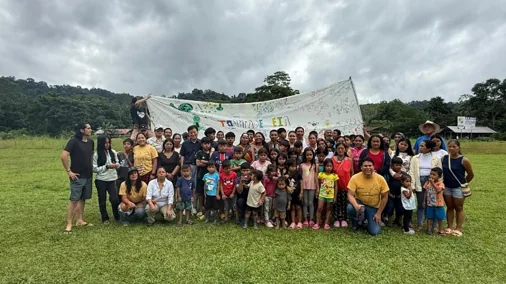
From the Intergenerational Water School, testimonies have been collected from people of all ages, who state that there is no drinking water system that reaches the community, water for human consumption is obtained from the collection of rainwater in suboptimal conditions to preserve health, since tanks that do not receive maintenance are used. In this territory of about 355 inhabitants, two indigenous nationalities coexist: Waorani and Kichwa. Its main source of income is currently the sale of balsa wood, without adequate environmental regulations, nor a standardization of prices. It has an important hydrographic network interconnected with other rivers of the Waorani ancestral territory such as the rivers: Curaray, Tzapino, Oña, Napo, Yasuní, Shiripuno, Cononaco, Tiputini, Tivacuno, Tigüino, Nushiño, and Napo. In this territory they say that there are currently families who fish with cockroach poisons because they generate an abundant catch, without maximizing the damage to the river and health. Being an intergenerational participation, these stories are heard by the younger generations, who can no longer enjoy clean rivers to bathe, but must go into the jungle to find sources of clean water. The ecological debt that the country has with this Amazonian territory that captures CO2 is not measured by environmental and water control and care entities.
Water for human consumption in Mulaló
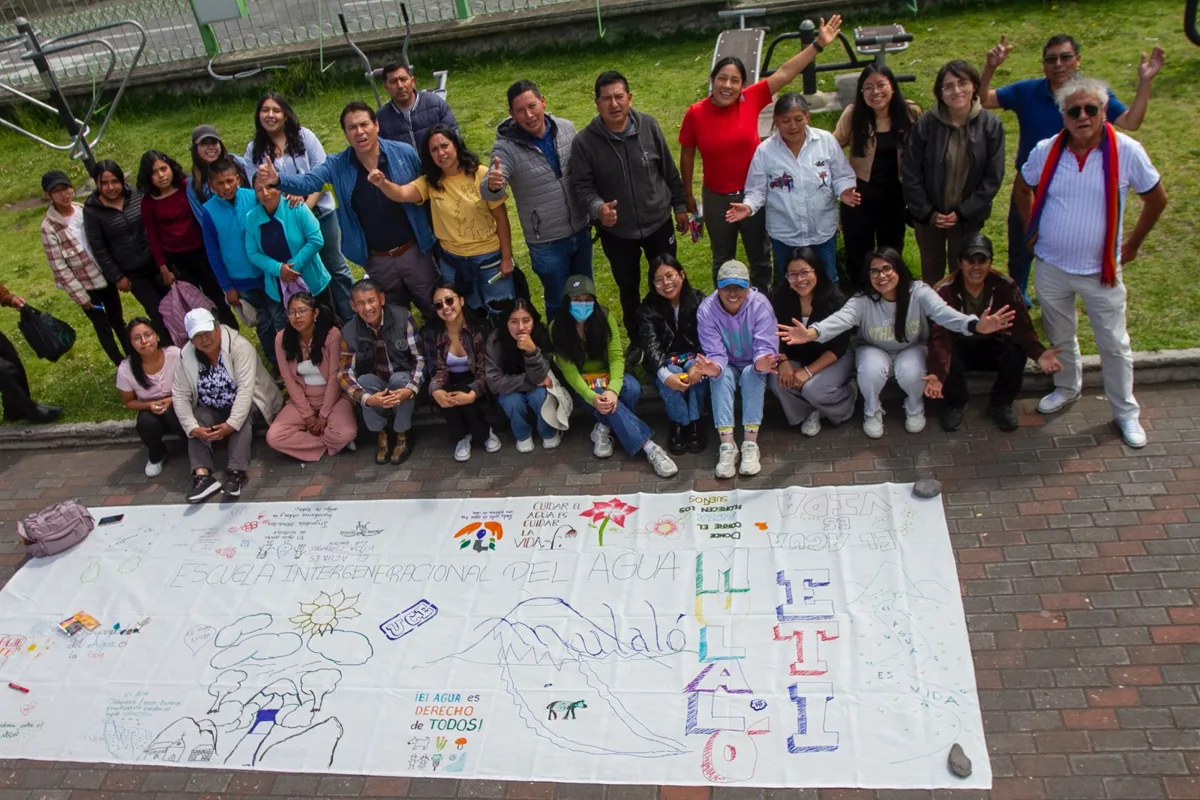
Mulaló is found on the slopes of the Cotopaxi volcano in the Ecuadorian Andes, this elevation contributes to the hydrographic system of Ecuador, its melting ice feeds rivers that sustain the life of Ecuadorians. The Intergenerational Water School has collected the stories of young women organized in the Semillas del Campo Collective, an initiative to recover the peasant identity of their ancestors to take care of their territory. This group says that water for human consumption is limited and irregular, which is affected by the intense agro-industrial activity of the sector, flowers and broccoli for export, and the use of agrochemicals that pollute water sources. The motivations vary according to the generation: the youngest seek clean water to grow up healthy and have a dignified life as shown in other sectors through social networks; Adults and older adults yearn to recover the purity of the water they knew years ago and for which their grandparents fought through mingas - collective work activity, to bring water to their homes through the piping of the river or water springs. There is a general concern about the quality of the water they drink as agribusiness continues to grow and reach the páramos from which they take their water. The contamination of the Cutuchi, Aláquez, Yanayacu, Cunuyacu and Illuchi rivers that surround this area is also of concern.
Water for human consumption in Puerto Santa Ana - Madre Tierra
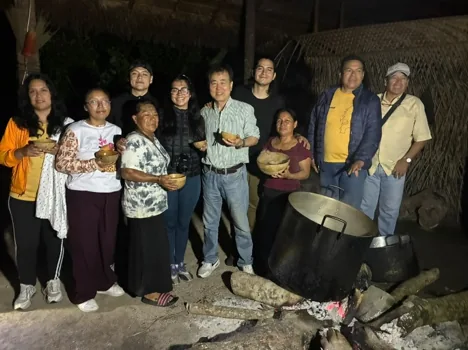
Puerto Santa Ana is an indigenous community with four Amazonian nationalities, its population consists of 388 people, mostly Kichwa nationals, its main subsistence activity is small-scale agriculture, a small percentage is dedicated to ecological or conservation tourism. Participation in the Intergenerational Water School is adults in the range of 20 – 65 years old, mostly women belonging to the Sinchi Warmi Women's Association, who are dedicated to the care of their gardens, marketing organic products and making handicrafts with identity to sustain their homes. Testimonies about water for human consumption in this sector show that although the level of rainfall is high and they live on the banks of the Pastaza River, they do not have a drinking water system. The Pastaza River is polluted. To have water in their homes they need to store rainwater, while drinking clean water they need to buy bottled or from large tankers that travel the area. The vulnerability in which these indigenous nationalities live relegate them from national development, as they contribute to the care of biodiversity to mitigate climate change, but they do not receive state support to have quality water as a basic principle of well-being.
Water for human consumption in San Antonio - Mitad del Mundo
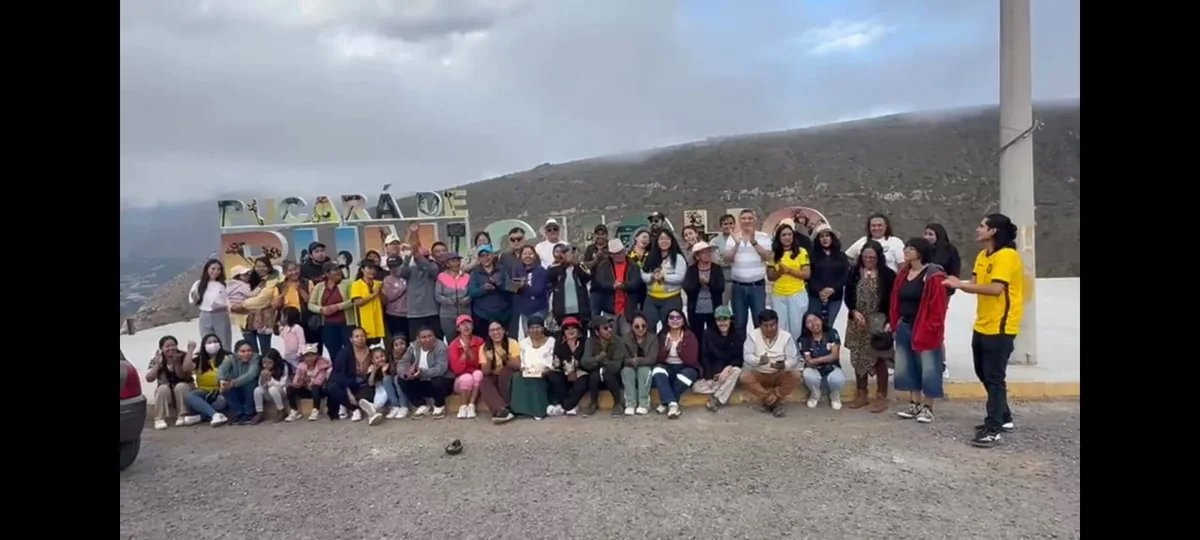
The Intergenerational Water School in coordination with the Taita Wasi Cultural Center of San Antonio de Pichincha have collected stories about the state of water for human consumption in the area. Among the most outstanding data is the ethnic self-determination of the inhabitants of the Carcelén-Bajo Commune as "kitu-karas", a millenary indigenous people settled in the Middle of the World (parallel 0°), their reconstruction of ancestral memory has led them to look to their water sources as a clue to understand what the territory of their ancestors was like. They claim possession of the Monjas River, which is polluted and has a protection action for its recovery. They explain that the desertification of the soil is currently the product of quarries for the extraction of stone material, the growth of settlements without planning and the lack of control over the use of common goods in the sector. The participants in this group are primarily adults, a considerable number of women.
In conclusion, based on research-action projects for transformation, Social Work contributes to the ecological struggle for water justice for vulnerable sectors. The intergenerational approach is a technical commitment to strengthen the community fabric and build a collective memory of water that sustains the defense of planetary life. The results collected in the school are also contributions to the Intergenerational Territorial Studies promoted by Ecuadorian critical Social Work. Finally, a door is left open to address the inequality of access to water for human consumption from Social Work as a challenge to achieve social and water justice for the populations with whom this discipline and profession walk day by day.
Sources:
Constituent Assembly. (2008). Constitution of the Republic of Ecuador. Montecristi: Official Registry.
Central Bank of Ecuador. (January 2025). Trade Balance by Product. Retrieved from Central Bank of Ecuador: https://contenido.bce.fin.ec/documentos/Estadisticas/SectorExterno/BalanzaPagos/balanzaComercial/ebc202602.html
Economic Commission for Latin America and the Caribbean. (2022, December 18). A transformative recovery in Latin America and the Caribbean with basic services of drinking water and electricity as key sectors. ECLAC. https://www.cepal.org/es/notas/recuperacion-transformadora-america-latina-caribe-servicios-basicos-agua-potable-electricidad
- Economic Commission for Latin America and the Caribbean. (2023). Indigenous peoples in Latin America: progress in the exercise of their rights and persistent challenges for a transformative recovery. United Nations. https://celade.cepal.org/documentos/plataforma/Update/RecursosDifusion/DerechosColPueblosInd2023_es.pdf
Guarani Aquifer System – Medium-Sized Project (MSP). (2023). Implementation of the GAS Strategic Action Programme: Facilitating Regional Actions. An initiative of the GEF, UNESCO, and CAF. https://acuiferoguarani.org/acuifero/
National Assembly of Ecuador. (2014). Organic Law on Water Resources, Uses, and Exploitation. Official Registry Supplement 305 of August 6, 2014.
UNICEF & World Health Organization. (2016). Inequalities in sanitation and drinking water in Latin America and the Caribbean. UNICEF. https://www.unicef.org/lac/informes/desigualdades-en-materia-de-saneamiento-y-agua-potable-en-america-latina-y-el-caribe
- Verdezoto, A. (2026). The news in depth. Retrieved from Ecuavisa: https://www.ecuavisa.com/la-noticia-a-fondo/situacion-mineria-ilegal-contaminacion-crimen-ecuador-20260204-0044.html
Water Regulation and Control Agency. (2026). The National Government evaluated the drinking water and sanitation services of local governments: 71% of the population still does not receive water that meets quality standards. https://www.regulacionagua.gob.ec/el-gobierno-nacional-evaluo-los-servicios-de-agua-potable-y-saneamiento-de-los-gad-71-de-la-poblacion-aun-no-recibe-agua-con-estandares-de-calidad/