
Political social work in Australia: Comforting the afflicted and afflicting the comfortable
Introduction
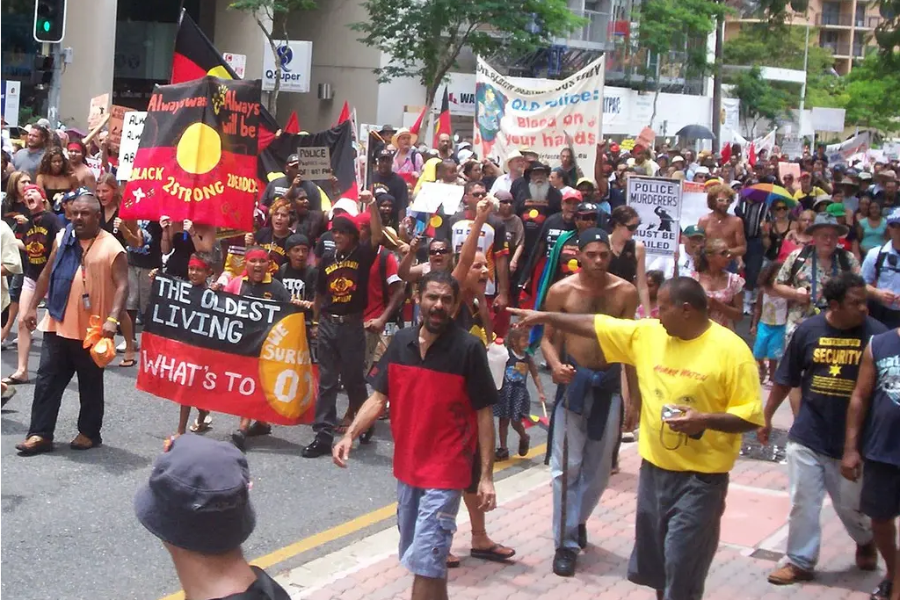
Australia faces a myriad of challenges, including Indigenous injustice, housing and homelessness crises, poverty and rising inequality, and punitive migration policies. Considering these issues, political social work needs to reclaim its advocacy roots to not only remain relevant but also address systemic injustices. Social work should be viewed as a driver of systemic change, rather than merely a responder. This article argues there is a persistent, urgent, and incumbent need for Australian political social work to transition from a reactive stance to a proactive and formidable force for systemic change—even including electoral participation by social workers. Unlike the outrage and virulent attacks against the suffering of Palestinians in Gaza (Katanasho, 2025; SBS News, 2025), the plight of Indigenous Australians in remote and rural communities remains largely unseen. Until this transformation occurs, social work in Australia will struggle to comfort the afflicted and afflict the comfortable.
The scope of political social work
Human rights and social justice are central to social work practice and education (Briskman, 2019; Noble, 2017; Popescu & Libal, 2018; Taylor et al., 2015). The Australian Association of Social Work (2025) underscores advocacy as fundamental to the profession. Political social work engages the systemic and structural factors that perpetuate inequality, influencing legislation and public discourse while advancing social justice for marginalised and vulnerable populations.
Contemporary social issues in Australia
Colonisation and repressive government policies caused devastating changes in the lives of Indigenous people (Bennett & Gates, 2021; Cunneen, 2014). These included forced removals, bans on language and culture, and discriminatory wage controls—evidenced by the Federal Court’s award of AUD144 million to Aboriginal families for stolen wages (Marshall et al., 2024). Lifelong harm continues through addictions, suicide, and mental health issues (Bennett & Gates, 2021; Dudgeon & Holland, 2018). Class action outcomes have raised questions of justice, as victims receive comparatively little while funders and firms benefit (Connolly et al., 2025). Political social work can advocate for alternative funding models and access to justice.
Ongoing poverty and inequality
Poverty disproportionately affects First Nations Australians outside major cities (Davidson et al., 2020). Costs of essentials are higher in remote communities, health concerns are more prevalent, and access to culturally safe midwifery remains unequal despite strong outcomes (McLachlan et al., 2022; Miller & Burnette, 2016). Eradicating poverty aligns with Sustainable Development Goal 1 and core social work ethics (IFSW, 2022).
Overrepresentation in the criminal justice system
Transport injustice contributes to incarceration when unlicensed driving becomes an outcome of limited access to licensing (Masterton et al., 2023). Reoffending risk is exacerbated by unstable housing, employment, and health supports (Bahr, 2025). The housing crisis is acute, with 20.4% of First Nations Australians experiencing homelessness and 60% in severely crowded dwellings (ABS, 2021). Political social work can support culturally safe licensing programs, re-entry supports, and housing-first approaches.
Indigenous Voice to Parliament
Though unsuccessful, the referendum sought constitutional recognition and a pathway to address entrenched inequality. Its failure has been tied to rising racism and division, with profound impacts on First Nations leaders and communities (Women’s Agenda, 2025). Continued advocacy remains critical.
Punitive migration policies
Mandatory detention produces profound harms and public health risks, as facilities are overcrowded and porous while detainees are excluded from urgent health responses (Peterie, 2019; Vogl et al., 2021). Social workers have a longstanding role in advocating humane treatment and resisting punitive practices (Briskman, 2019).
Conclusion
Political social work in Australia stands at a pivotal moment, requiring a shift from reactive practice to proactive advocacy. Social workers should actively influence legislation and public discourse, centre rural and remote communities, and strengthen training in human rights and social justice. Partnerships across government, NGOs, and communities can enhance impact, while evidence should guide policy and practice. The profession calls for women and men of heart, mind, and moral integrity to live its cardinal principles daily.
References
- Australian Association of Social Work (2025). Social policy and advocacy overview. aasw.asn.au
- Australian Bureau of Statistics (2021). Aboriginal and Torres Strait Islander peoples experiencing homelessness. abs.gov.au
- Bahr, J. (2025). Criminals are more likely to re-offend in Australia… sbs.com.au
- Bennett, B. & Gates, T. G. (2021). Teaching cultural humility… Social Work with Minority Groups, 47–60.
- Briskman, L. (2019). The people’s inquiry into detention… Journal of Sociology, 56(1), 100–114. doi.org
- Connolly, A., McDonald, A., & Robb, K. (2025). Law firms and investors making millions… abc.net.au
- Cunneen, C. (2014). Colonial processes… In The Oxford handbook of ethnicity, crime, and immigration. Oxford University Press.
- Davidson, P., Bradbury, B., & Wong, M. (2020). Poverty in Australia 2020: Part 2… povertyandinequality.acoss.org.au
- Dudgeon, P. & Holland, C. (2018). Recent developments in suicide prevention… Australasian Psychiatry, 26(2), 166–169.
- Fanon, F. (1963). The wretched of the earth. Penguin Books.
- International Federation of Social Workers (2022). The global agenda… ifsw.org
- Katanasho, G. (2025). Emaciation, miscarriages and death… sbs.com.au
- Marshall, A., Deves, E., & Bertoglio, G. (2024). Federal court grants $144 million… abc.net.au
- Masterton, G., Brady, M., Watson-Brown, N., Senserrick, T., & Tranter, K. (2023). Driver licences… Int. Journal for Crime, Justice and Social Democracy, 12(3), 93–107. doi.org
- McLachlan, H. L., et al. (2022). Translating evidence into practice… EClinicalMedicine, 47. doi.org
- Miller, S., & Burnette, C. E. (2016). Closing the Indigenous Australian health gap… Journal of Australian Indigenous Issues, 19(4), 26–41. search.informit.org
- Noble, C. (2017). What is this new thing called ‘populism’? Social Dialogue, 5(17), 6–8.
- Peterie, M. (2019). Forced relocations… Journal of Refugee Studies, 34(3), 2655–2675.
- Popescu, M. & Libal, K. (2018). Social work with migrants and refugees… Advances in Social Work, 18(3), i–x. doi:10.18060/22600
- SBS News (2025). Albanese responds to Netanyahu’s criticism… sbs.com.au
- Taylor, S., Vreugdenhil, A., & Schneiders, M. (2015). Social justice as concept and practice… Australian Social Work, 70(sup1), 46–68. doi.org
- Vogl, A., Fleay, C., Loughnan, C., Murray, P., & Dehm, S. (2021). Covid-19 and the relentless harms… Crime Media Culture, 17(1), 43–51.
- Women’s Agenda (2025). One year on: Indigenous communities reflect… womensagenda.com.au
- Zoumboulis, N. (2025). Indigenous Australians have experienced increased racism over the past decade. (News commentary).