

Coded-Language, Silenced Justice: The Politics of Teaching Social Work Today
This article examines how contemporary political climates—marked by censorship of terms such as diversity, equity, and inclusion—threaten the ability of social work education to engage in justice-centered teaching. Drawing from historical and global struggles for social justice, we argue that coded-language policies silence emancipatory traditions that are central to the profession. By revisiting past sites of resistance and examining the rise of neo-right movements, we situate social work within a global political struggle and call for the courage to reclaim its role as an advocate for human rights.
The Arc and the Silencing of Justice
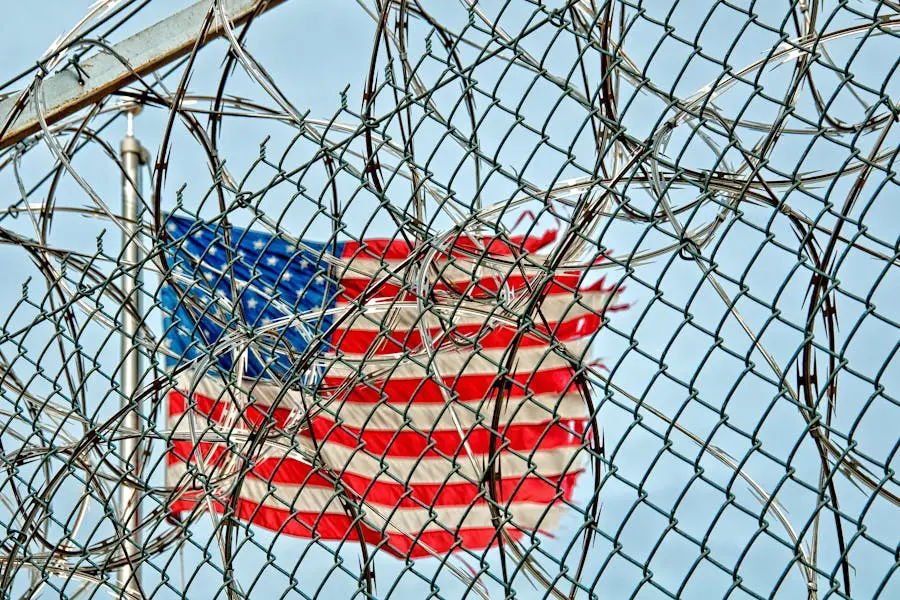
Social work stands at a crossroads. Once envisioned as a profession grounded in advocacy, human rights, and the pursuit of equity, it now finds itself increasingly policed by political actors who seek to narrow its vocabulary and constrain its mission, thus restraining its ethical foundation of social action and justice. The use of terms such as “anti-racism,” “diversity,” “equity,” and “inclusion” has been banned in some U.S. states, at the U.S. federal level, and in other global contexts, effectively weaponizing language to silence justice-oriented teaching. As Martin Luther King, Jr. declared, “The arc of the moral universe is long, but it bends towards justice” (King, 1965, para. 28). Yet today, that arc is bent backward by censorship, erasure, and reactionary politics.
The silencing of words is not a superficial issue of semantics. It represents a deeper attack on the liberatory traditions of social work that draw from the legacies of resistance—whether Freire’s pedagogy of the oppressed, Hooks’ teaching to transgress, or global struggles for liberation from colonialism and authoritarian rule. The roots of censorship and diminishing access to knowledge run deep, both globally and in the United States. Early examples from the enslavement of Africans in the U.S. demonstrate how highly restrictive and controlled education serves to maintain suppression and oppression. This article argues that bans on coded language and political censorship not only undermine academic freedom but also distort the very essence of social work as a political practice.
Historical Legacies of Political Resistance in Social Work
Social work’s identity as a profession influenced by the political climate is not a new phenomenon. The settlement house movement, anti-colonial struggles, and the global fight against apartheid and racial segregation all shaped the discipline’s ethos. Apple (2019) reminds us that curriculum is never neutral; it reflects ideology and power. The banning of language today echoes earlier attempts to politicize education, stripping it of its radical potential to transform unjust systems.
Across contexts, our pedagogical ancestors embodied resistance in the promotion of social justice. In the United States, Ida B. Wells exposed lynching through investigative journalism, W.E.B. Du Bois’ The Philadelphia Negro (1899) fused data with advocacy, and Septima Clark’s citizenship schools advanced literacy as civic empowerment. Globally, Pandita Ramabai’s reform efforts in India (Desai, 2006), South African social workers’ resistance to apartheid (Schmid & Sacco, 2012), and African Caribbean cooperative economies (Taylor, 2013) illustrate how communities leveraged social work as a political practice.
These histories demonstrate that social work cannot retreat into neutrality without betraying its own legacy. As Martin Luther King, Jr. observed, “The arc of the moral universe is long, but it bends towards justice” (King, para. 28, 1965). The act of political silencing is part of a long continuum of efforts to domesticate the discipline and quiet the voices for equity and justice. In the United States, as with much of global politics, such pressures have taken on renewed legislative force. In essence, the current climate has legalized and normalized anti-justice, anti-equality systemic oppression, and deconstructed the very values relied upon by social workers.
Renewed Silencing in the Classroom
While social work globally faces varied political pressures, in the United States, the classroom is now a central site of renewed constraint, with terms like “divisive concepts” dampening academic freedom. Ecological dissonance—periods when societal systems and values are misaligned (Crawford, 2014)—is compounded by legislative attacks: since 2023, at least 157 bills targeting social justice and DEI in education have been introduced across 34 states, and as of mid-2024, 15 states have enacted bans into law (Movement Advancement Project, 2024). This silencing directly reshapes the classroom, constraining curricula and narrowing the ethical space for teaching justice. Nevertheless, the six core values of social work—service, dignity and worth of the person, competence, integrity, human relationships, and justice—require educators to resist domestication and continue advancing equity and change.
Coded-Language and Contemporary Censorship
In the current political climate, the banning of “anti-racism,” “equity,” and related terms is framed as a move toward neutrality. In reality, such censorship represents an ideological project aligned with neo-right movements seeking to dismantle progress toward racial and social justice. Sensoy and DiAngelo (2017) argue that pretending to be “neutral” reinforces dominant narratives and sustains systemic inequities.
For social work education, the consequences are profound. Curriculum mapping, practicum education, and classroom practice all depend on clear engagement with concepts like racism, oppression, and equity. When educators are forced to replace “anti-racism” with euphemisms such as “belonging” or “student success,” the language loses its political edge and deeper societal meaning. What remains is a watered-down version of social justice, one that maintains systems of inequality rather than challenging them. Reisch (2019) highlights how social work is at constant risk of being depoliticized, especially during periods of political backlash. The silencing of language reflects a broader effort to castigate social work into compliance with authoritarian and neoliberal perspectives.
Global Perspectives: Language, Politics, and Resistance
Although the U.S. context has drawn attention, these issues are global in scope. In Hungary and Poland, governments have restricted discussion of gender studies and LGBTQ+ rights in higher education. In India, authoritarian policies have targeted human rights NGOs, limiting their ability to partner with social work programs. Dominelli (2020) reminds us that globalization has intensified these struggles, creating both shared opportunities for solidarity and common threats of silencing.
From South Africa to Brazil, grassroots social workers have long resisted authoritarianism by linking practice to liberation struggles. Lombard (2015) positions social work as a political practice perspective, arguing that global justice cannot be achieved without explicitly naming and resisting structures of oppression. Thus, when social work educators in the U.S. are pressured to remove “anti-racism” from syllabi, it must be understood not as an isolated attempt to adhere to national policy but as part of a global wave of political repression against justice-oriented practice and professions.
Social Movements as Teachers of Courage
History teaches that silence is complicity. Abrams and Dettlaff (2020) document how, during the COVID-19 pandemic, social workers confronted both systemic inequities and the politics of neglect in frontline practice. These experiences reinforced the truth that social work cannot be separated from politics. Likewise, Freire (1970) emphasized that education is never neutral: it either functions as an instrument of oppression or liberation.
Social movements—from civil rights and feminist struggles to current resistance against authoritarian governments—remind social workers that progress emerges not from compliance but from resistance. Hooks (1994) calls this “education as the practice of freedom,” where the classroom itself becomes a site of activism. To remove the language of justice from the classroom is to transform it into a site of oppression.
The Politics of Teaching Social Work Today
Teaching social work under conditions of censorship demands courage. Educators must navigate politically imposed silences while still preparing students to serve diverse, marginalized communities. Creative resistance may include embedding justice concepts through case studies, fostering critical reflection without relying solely on banned terminology, and linking classroom learning to lived experiences in the community.
Yet strategies of adaptation must not transfer into acceptance or serve to lull academia into complacency through a path of least resistance. Political social work, as Lombard (2015) emphasizes, requires reclaiming the discipline as a site of active resistance to injustice. Silence, even when strategic, risks becoming complicity. Silence can be misconstrued as agreement, further sending social work down the slope of lost identity and loss of the profession’s justice-embedded roots.
The Future: Courage, Action, and Justice
As we look to the future, the politics of social work must be framed not by compliance but by courage. King’s reminder that the arc of the moral universe bends toward justice is both a comfort and a challenge. The arc bends only when hands pull it forward, forming and reforming the bend even when resistance pushes back. Today, those hands belong to educators, practitioners, and students who refuse to let the language of justice be erased.
To move forward, social work must:
- Reclaim its global political tradition, drawing lessons from liberation movements worldwide.
- Defend justice-oriented language as central to the profession’s mission.
- Resist coded silencing by naming power and oppression directly.
- Foster solidarity across borders, recognizing that struggles in the U.S. connect with global movements for justice.
The politics of the future will not be kind to neutrality. In an unfair world, social work must stand with courage, voice, and action—insisting that justice remains at the heart of its teaching, practice, and research.
References
- Abrams, L. S., & Dettlaff, A. J. (2020). Voices from the frontlines: Social workers confront the COVID-19 pandemic. Social Work, 65(3), 302–305. doi.org
- Apple, M. W. (2019). Ideology and curriculum (4th ed.). Routledge.
- Crawford, M. (2014). Ecological dissonance and adaptation in higher education. Journal of Transformative Education, 12(3), 234–250.
- Desai, A. (2006). The legacy of Pandita Ramabai in Indian social reform. Indian Journal of Gender Studies, 13(3), 375–394.
- Dominelli, L. (2020). Social work in a globalizing world (3rd ed.). Polity Press.
- Freire, P. (1970). Pedagogy of the oppressed. Herder and Herder.
- Hooks, B. (1994). Teaching to transgress: Education as the practice of freedom. Routledge.
- King, M. L., Jr. (1965, February 26). Sermon at Temple Israel of Hollywood. americanrhetoric.com
- Lombard, A. (2015). Global social work: A political practice perspective. International Social Work, 58(2), 231–243.
- Movement Advancement Project. (2024, July). Dismantling DEI: A coordinated attack on American values. mapresearch.org
- Reisch, M. (2019). Social work and social justice: Concepts, challenges, and strategies for a new era. Social Work & Society, 17(2), 1–14.
- Schmid, J., & Sacco, T. (2012). The story of resistance: Concerned Social Workers. The Social Work Practitioner-Researcher, 24(3), 291–308.
- Sensoy, Ö., & DiAngelo, R. (2017). Is everyone really equal? Teachers College Press.
- Taylor, P. (2013). Cooperative economics and the African Caribbean community. Journal of Black Studies, 44(3), 245–263.