


Street Vendors: Confronting Health Challenges Amidst Urban Landscapes
Two billion people work informally worldwide, making up a sizeable component of the labour force in many low and middle-income countries, yet the impact of this employment on health has received very little attention in the literature. India contributes the fifth-largest share of the global gross domestic product, with the informal sector accounting for more than 80% of the nation's GDP. One of India's three or four largest metropolitan areas, Bangalore, makes up 10% of this total and, as one of the country's principal economic hubs, makes a perfect study focus. Since its founding, the 450-year-old city has played a significant role as a commercial centre, and the former trading fort has grown to become the current city's major marketplace, bustling with merchants selling their wares and services throughout its streets, which together form an unofficial urban public space (Patel, S., Furlan, R., & Grosvald, M. 2021).
This article is in line with SDG Goal 3, which appropriately states that promoting well-being for all ages and guaranteeing healthy lifestyles as priorities. Many people around the world still do not have access to essential healthcare services. It is imperative to address discrepancies in order to close this gap and guarantee equitable access to healthcare. The goal, which addresses the two crucial targets 3.8 - Achieve universal health coverage, including financial risk protection, access to quality essential health-care services and access to safe, effective, quality and affordable essential medicines and vaccines for all and target 3.9 - By 2030, substantially reduce the number of deaths and illnesses from hazardous chemicals and air, water and soil pollution and contamination (Goal 3 | Department of Economic and Social Affairs, n.d.), requires attention to a number of health determinants, including environmental and commercial variables. It is what universal health coverage seeks to accomplish (Sustainable Developmental Goals, n.d.).
Considering this scenario, we the social work trainees decided to engage in a constructive and significant exchange with six street vendors in order to learn more about the individuals experience in metropolitan Bengaluru. The primary goals of the interview were to first understand the health-related lifestyle choices made by street vendors and, secondly, to investigate the Affordability, Availability and Accessibility of health care systems (Saha, 2011). Numerous elements of their labour, including working conditions, hours worked, pay, and occupational health and safety, are not regulated and may be damaging to their health. In urban public spaces all throughout the world, you can see street vendors, but statistics on how many of them there are famously elusive. One such group in the informal and unorganized sector, who work day and night for meagre earnings in order to support their families and live their everyday lives. It is impossible to accurately estimate the struggle they go through in all four seasons, in the heat of the sun, or during severe rainfall. In order to improve the well-being of street vendors and ensure their sustainability in the future, an analysis is necessary to close the gaps and concentrate on the indicators that need greater attention.
A vicious cycle of challenges
The lifestyle of street vendors plays a crucial role in health promotion and improvement, as it directly affects their physical well-being and overall quality of life. Street vendors often face unique challenges due to their occupation, including long working hours, limited access to healthcare facilities, and limited resources for maintaining a healthy lifestyle (Challenges Faced by Street Vendors, 2018). Understanding and addressing these challenges are essential for promoting the health of street vendors and improving their overall health outcomes. Some of which are as follows:
- Occupational Hazards: Street vendors are subject to a variety of work risks, including standing for extended periods of time, carrying large loads, and exposure to harsh weather. These elements can cause weariness, musculoskeletal issues, and chronic discomfort. They start their routine from early morning and end their day nearly at midnight. They don't have any safety measures or first aid available at the workplace. All these factors affect the health of the street vendors. The other factors like education, income and availability of basic facilities like water and sanitation at residence and workplaces determine the health of the individual (Meher & Ghatole, 2020) (Sepadi & Nkosi, 2022).
- Nutritional Concerns: It might be difficult for street vendors to eat a diet that is both balanced and nourishing. They largely rely on readily available, cheap, and occasionally unhealthy dietary options. Poor nutrition, obesity, and chronic illnesses like diabetes and cardiovascular issues can all result from these decisions.
- Uncertain Employment: As a job, street vending is full of uncertainty because the earning range changes daily. Since it depends on a number of variables, there is no job stability in street vending. Due to these constraints and the instability of their work, street vendors find it difficult to prioritize their health.
- Mental Health and Stress: Due to the varying wages, everyday struggle and conflict, and lengthy working hours, street vending can be a difficult job (Rahman, 2019). Consequently, this may lead to simultaneous mental health problems of depression and anxiety.
- Hygiene and Sanitation: Street vendors face improper sanitation and hygiene standards that leads to the spread of diseases. The vendors should be encouraged to practice and ensure proper access to handwashing stations, clean water, and proper waste disposal (Kanungo et al., 2021).
Apart from the points mentioned above, the vendors face barriers in accessing healthcare services such as limited financial resources, lack of health insurance, and irregular working hours. All these factors make it challenging for them to seek regular medical care and thus it can be well noted how all these points are directly connected to the targets 3.8 and 3.9 and how important it is to address the issues of informal sectors to achieve universal health coverage (Subramanian et al., 2023).
Essence of the interview
To further examine the health care challenges and health-related issues specific to availability, affordability and accessibility of street vendors, the trainees had interviewed six street vendors to understand their experience better. The interviewees' age range was between 16 - 65 years old and their daily minimum income between 200 to 2000 rupees maximum on an average (Hoque, 2003). Out of the six interviewees, only one has completed their formal education successfully. Following a brief discussion with each of the six participants, the key problems identified included lack of prioritization of their health which contributes to increased health issues. Majority of them had faced body aches, back pain, ulcers, diabetes and other chronic illnesses. Speaking in particular about the area the trainees researched upon, it was observed that the width of the road is narrow for the vehicles to pass thus being a barrier to the street vendors as the space constraint is a huge issue for their daily vending.
Considering the high traffic volume area, the vehicles cause a lot of noise and air pollution which directly affects their health (Kiran, 2019). Street Vendors did not have access to adequate food and clean restrooms as they did not have a suitable assigned spot. Especially for women, it is extremely challenging when they are menstruating. This was one of the major concerns that affects their reproductive health as well. It was observed during the interviews that most of the participants were unaware of the health care delivery systems available through the government hence, the health seeking behaviour is directed towards the local pharmacies to cure the illness by themselves.
Street vending in specific has a lot of uncertainties, to cite a few, the interviewees had mentioned that their operational time were too long, (Panwar & Garg, 2015) mostly from 4:00 am till 10:00 pm which makes them physically exhausted throughout the day. Usage of carts are quite common in regards to street vending, but one among the interviewees had mentioned that he bicycles to various places to sell one particular type of vegetable making the probability of earning low when compared to the vendors nearby. This in turn consumes a lot of physical energy and requires adequate care, having a toll against their health. Furthermore, the nature of employment is unstable; they may experience profit and loss or perhaps lose the job altogether. These challenges make them unable to meet ends, having an adverse effect on their health.
Social work interventions alongside SDG - a step towards an egalitarian society
Giving special focus on SDG 3.8: Achieve Universal Health Coverage (UHC), which deals with proximity and convenience, it's critical to make sure that health services are easily accessible and conveniently located for street sellers. They lift heavy weights while opening and closing the shop daily and they work for a long time. The implementation of mobile health units near street vendors' places of business to improve accessibility and the extension of clinic hours to account for street vendors' irregular work schedules will promote routine health examinations. Furthermore, campaigning for affordable and cost-effective health care services for street sellers and developing funding mechanisms or health insurance programmes adapted to meet the specific budgetary restrictions of street vendors.
Minimizing the need for street vendors to go to distant medical facilities by scheduling regular health fairs, examinations, and preventative care services, as well as implementing targeted health outreach initiatives created especially for them. However, SDG 3.9—Substantially Reduce the Number of Deaths and Illnesses—should also receive equal attention since it calls for increasing health literacy and making street sellers aware of the resources for medical care that are accessible. provide street vendors with the knowledge and resources they need to make wise health decisions and successfully navigate the healthcare system. creating a multidisciplinary strategy that addresses social, psychological, and physical well-being to identify and address the different health challenges that street vendors face. This approach should involve healthcare professionals, social workers, non-profit organizations, and governmental organizations.
A district-level approach adds a significant level of precision to the public policy environment, particularly given the considerable influence and autonomy enjoyed by district administrations in promoting the welfare of their constituents. In order to properly target current needs at the district level, policies and programmes that need to be freshly created, amended, or better prioritized must be closely monitored at the district level in order to obtain a comprehensive picture of where India stands (Husain et al., 2015) (BHOWMIK, S.2010). The well-being of street vendors can be assessed by this method, at least district by district, and a methodical and sustainable strategy will guarantee the informal sector's healthy existence free from social disapproval or unstable finances.
Conclusion
On a concluding note, accessibility, affordability, and availability of health care delivery systems for street vendors requires a comprehensive and tailored approach. By recognizing and addressing the unique challenges they face and implementing comprehensive strategies that encompass nutrition, occupational health, mental well-being, access to healthcare, hygiene, and community support, we can make significant strides in enhancing the health outcomes in alignment to SDG Goal 3 and quality of life for street vendors to promote overall health and well-being of street vendors to attain an egalitarian society.
Gallery: Some pictures from the field
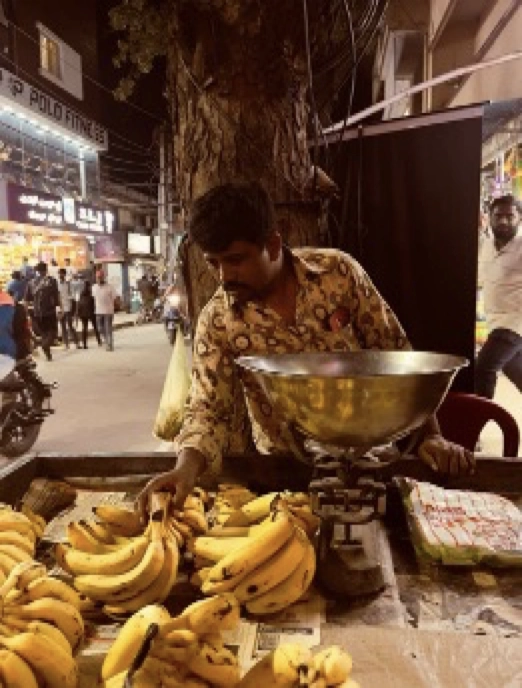
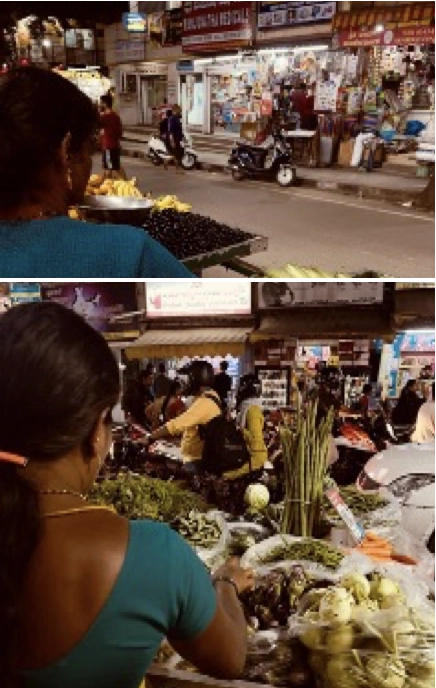
References
BHOWMIK, S. (2010). Legal Protection for Street Vendors. Economic and Political Weekly, 45(51), 12-15. http://www.jstor.org/stable/25764233 Challenges faced by street vendors. (2018). https://www.indianjournals.com/ijor.aspx?target=ijor:ijrss&volume=8&issue=11&article=061 Goal 3 | Department of Economic and Social Affairs. (n.d.). https://sdgs.un.org/goals/goal3#targets_and_indicators Hoque. (2003, April). Socio-Economic Status, Health Condition and Working Profile among Street Vendors (Hawkers) in Malda district of West Bengal: A Study of Unorganized and Informal Sector Economy and Livelihood Opportunity. International Research Journal of Education and Technology, 5(4), 16. www.researchgate.net Husain, S., Yasmin, S., & Islam, M. S. (2015, August 28). Assessment of the Socioeconomic Aspects of Street Vendors in Dhaka City: Evidence from Bangladesh. Asian Social Science, 11(26). doi.org Kanungo, S., Chatterjee, P., Saha, J., Pan, T., Chakrabarty, N., & Dutta, S. (2021). Water, sanitation, and hygiene practices in urban slums of eastern India. The Journal of Infectious Diseases, 224(Supplement_5), S573-S583. doi.org Kiran, P. B., & G.N.P.V. (2019, June). PROBLEMS AND PROSPECTS OF STREET VENDORS: A STUDY WITH REFERENCE TO VISAKHAPATNAM CITY (6th ed., Vol. 9). International Journal of Management, Technology And Engineering. www.researchgate.net Meher, S. R., & Ghatole, P. S. (2020). A study of common health problems and utilization of healthcare facilities among self-employed street vendors of Chandrapur district of Maharashtra. International Journal of Community Medicine and Public Health, 7(7), 2782. doi.org Patel S., Furlan R., & Grosvald M. (n.d.). A Framework for Enhancing the Spatial Urban Form of Informal Economies in India: The Case of Krishna Rajendra Market, Bangalore. SAGE Open, 11(2). doi.org Panwar, A., & Garg. (2015, February). ISSUES AND CHALLENGES FACED BY VENDORS ON URBAN STREETS: A CASE OF SONIPAT CITY, INDIA (2nd ed., Vol. 3). www.researchgate.net Rahman, M. S. (2019, August 20). Exploring Socio-Economic and Psychological Condition of Street Vendors of Barishal City: Evidence from Bangladesh. worldscholars.org Saha. (2011). WORKING LIFE OF STREET VENDORS IN MUMBAI. The Indian Journal of Labour Economics, 54(2), 24. www.shram.org Sepadi, M. M., & Nkosi, V. (2022, January 25). Environmental and Occupational Health Exposures and Outcomes of Informal Street Food Vendors in South Africa: A Quasi-Systematic Review. International Journal of Environmental Research and Public Health, 19(3), 1348. doi.org Subramanian, S., Ambade, M., Kumar, A., Chi, H., Joe, W., Rajpal, S., & Kim, R. (2023, June). Progress on Sustainable Development Goal indicators in 707 districts of India: a quantitative mid-line assessment using the National Family Health Surveys, 2016 and 2021. The Lancet Regional Health - Southeast Asia, 13, 100155. doi.org Sustainable Developmental Goals. (n.d.). United Nations. Retrieved November 23, 2023, from www.un.org